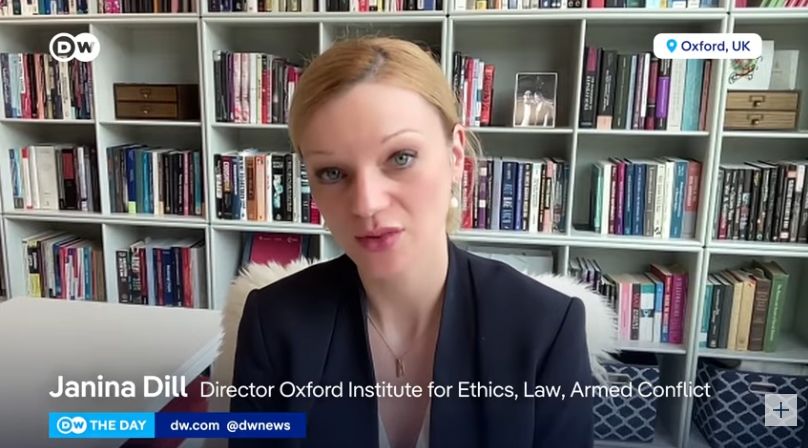
In a recent Al Jazeera article examining the history and implications of threats to “bomb [countries] back to the Stone Age,” ELAC’s Janina Dill offers a legal perspective on the rhetoric and its real-world consequences. Her contribution underscores how such language is not merely political hyperbole—it raises serious questions under international humanitarian law (IHL).
Dill highlights that statements advocating the destruction of infrastructure on a massive scale may imply attacks on civilian objects. Under IHL, civilian infrastructure—such as energy systems, transportation networks, and essential services—is protected unless it constitutes a legitimate military objective. Framing military strategy in terms of widespread destruction risks blurring this distinction and normalising conduct that could violate the laws of war.
Her analysis reflects a broader scholarly contribution: bridging legal doctrine with ethical evaluation and empirical research on how norms shape wartime decision-making. By clarifying how legal categories apply to contemporary political rhetoric, Dill helps move debates beyond abstraction and toward accountability.
Importantly, her intervention also speaks to the role of norms in constraining violence. Even when political actors invoke extreme measures, international law and normative frameworks remain central to evaluating the legitimacy of those claims. Dill’s work reminds us that how leaders talk about war matters—not only for public perception, but for the boundaries of acceptable conduct.