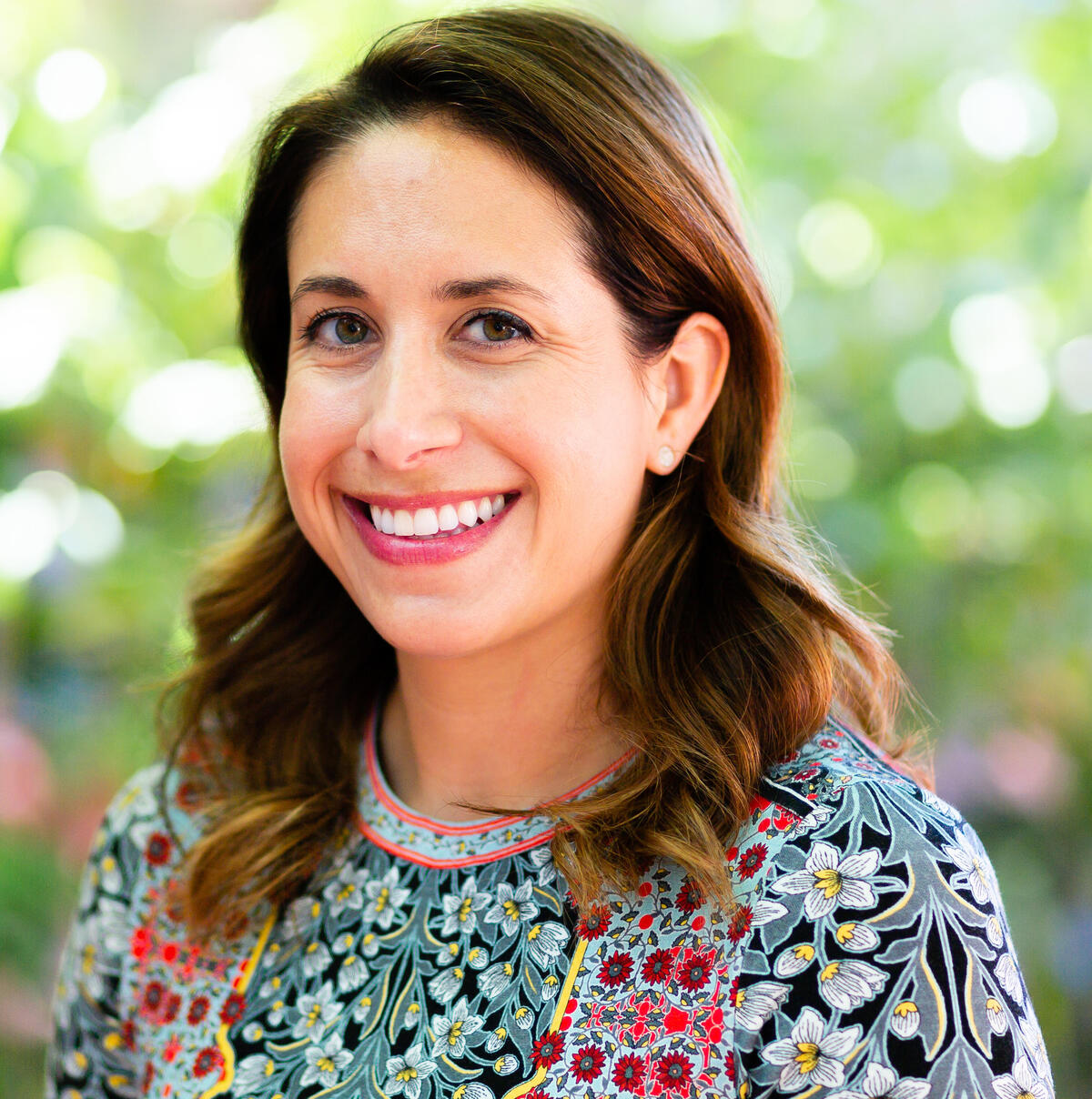
Lindsay Freeman is a former Visiting Fellow of Practice with the Blavatnik School’s Institute for Ethics, Law, and Armed Conflict’s Programme on International Peace and Security, where she worked with Federica D’Alessandra on a project aimed at improving the content moderation and preservation policies of technology companies regarding user-generated content that exposes international crimes and human rights violations. Under the auspices of the International Bar Association, and in partnership with the UC Berkeley Human Rights Center, this project created a space for open discussion between stakeholders in order to develop guidance and best practices, as well as recommendations for governments, international organisations and technology companies.
Lindsay is a US-qualified lawyer specialised in international criminal, humanitarian and human rights law. She is the Director of Law and Policy for the Technology and Human Rights Program at the Human Rights Center, UC Berkeley School of Law, and serves on the Technology Advisory Board of the International Criminal Court.
Lindsay led the drafting of the Berkeley Protocol on Digital Open Source Investigations and now leads the Human Rights Center’s professional trainings in open source investigations. She has worked on complex international criminal prosecutions and investigations, and has published several articles on the use of new and emerging technologies in war crimes investigations and the use of digital evidence in the courtroom.
Lindsay has worked as a consultant for the International Criminal Court’s Office of the Prosecutor, a trial lawyer at the San Francisco District Attorney’s Office, and a law clerk in the US Attorney’s Economic Crime and Securities Fraud Unit. She holds an Adv LLM in public international law from Leiden University, JD from University of San Francisco School of Law, and BA in Political Science from Middlebury College.