Home > New IPS Article: ‘International Agreements on the Regulation of Surveillance Technology’
New IPS Article: ‘International Agreements on the Regulation of Surveillance Technology’

Mar 7, 2022

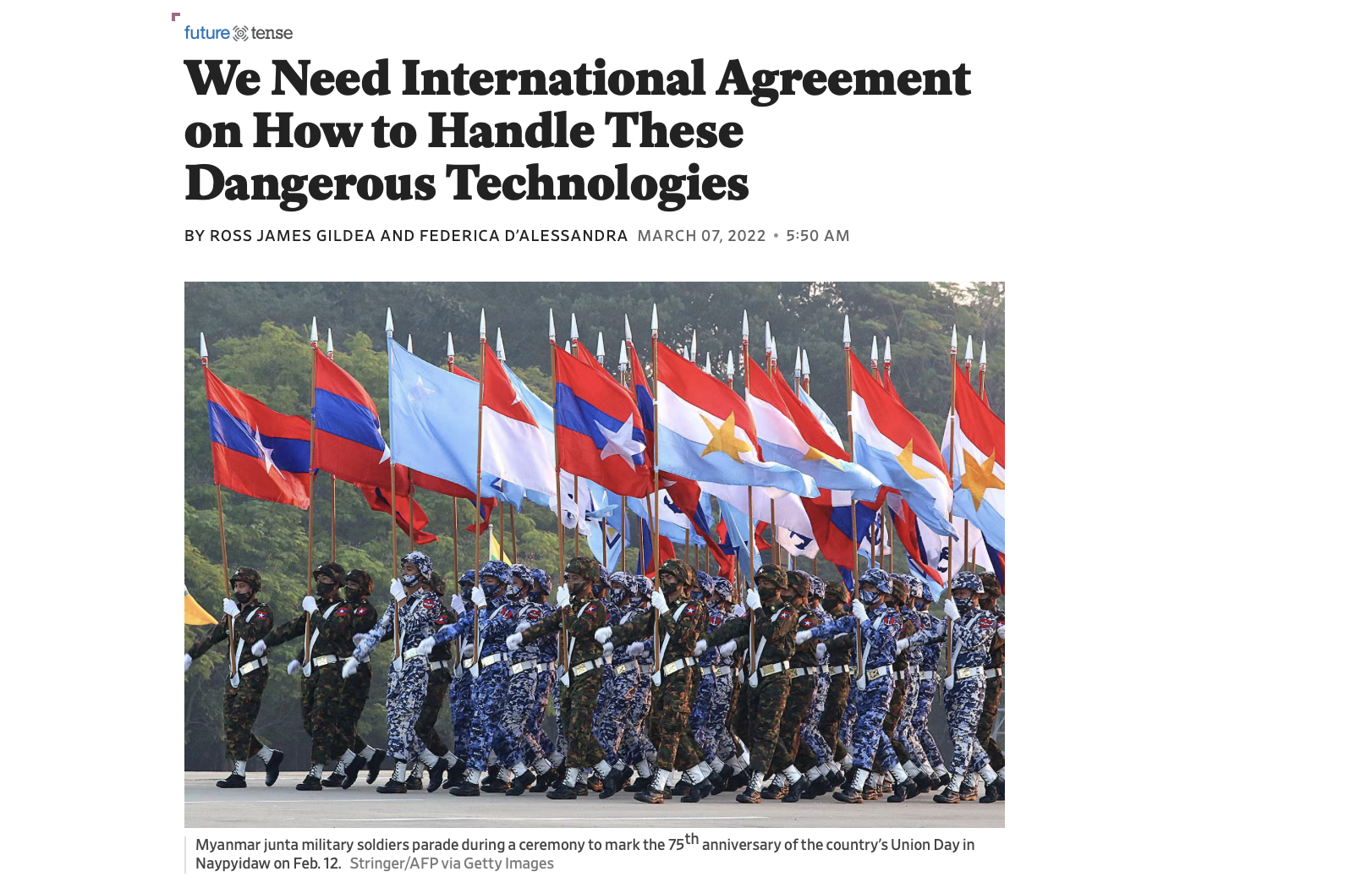
On 7 March, ELAC Deputy Director Federica D’Alessandra and IPS Postdoctoral Research Fellow Ross James Gildea published an article in Slate magazine. The article examines the harmful use of surveillance technology by governments, notably its potential to enhance state violence and enable mass atrocity crimes, as we have seen in Myanmar. They discuss the need to counter the spread of surveillance technology to repressive regimes, an aim complicated by its “dual use” applications and geopolitical competition – primarily between the US and China – in the tech space. The article makes the case for global cooperation to devise stricter regulations which would prevent the direct export or transit of surveillance tech to countries where it is likely to be used in atrocity crimes.

Loading...
Privacy Overview
Oxford Institute for Ethics, Law and Armed Conflict

This website uses cookies so that we can provide you with the best user experience possible. Cookie information is stored in your browser and performs functions such as recognising you when you return to our website and helping our team to understand which sections of the website you find most interesting and useful.

Strictly Necessary Cookies

This website writes one strictly necessary cookie. This cookie lets the site remember whether you have accepted or rejected cookies. You may disable this cookie but doing so will mean that the site will continue to ask you to update your cookie preferences.

Analytics

This website uses Google Analytics to collect anonymous information such as the number of visitors to the site, and the most popular pages.

By default, analytics cookies are disabled. If you enable analytics cookies we'll be able to use analytics data to help us improve this site.

3rd-party cookies

Some pages of this site may contain embedded Youtube videos. Youtube writes a number of cookies when a video is displayed and these cookies are required in order to display the video.

By default, we block cookies like these (otherwise known as 3rd-party cookies), however if you would like to view any embedded Youtube video you should enable 3rd-party cookies here.